
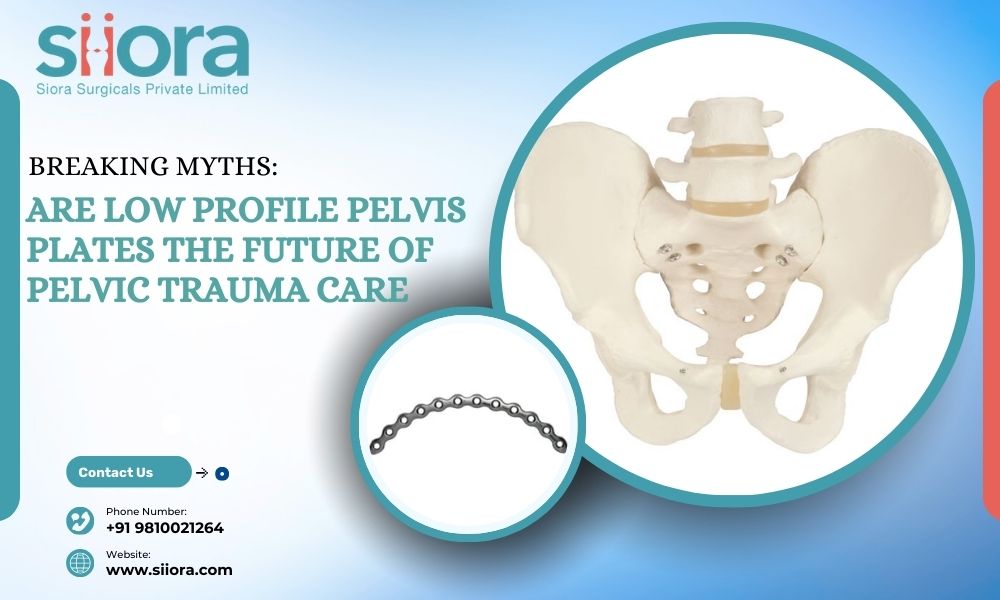
Pelvic fractures are among the most challenging injuries orthopedic surgeons encounter. These fractures, often resulting from high-impact trauma like car accidents or falls, require intricate surgical intervention to restore stability and function. Traditionally, standard pelvic plates have been the go-to solution. However, a new wave of innovation is emerging—low-profile pelvic plates. But are they really the future of pelvic trauma care or just another passing trend? Let’s talk about the common myths and uncover the truths behind them.
Myth 1: Low-Profile Pelvic Plates Are Less Durable Than Traditional Plates
One of the biggest misconceptions surrounding low-profile pelvic plates is that their slim design compromises durability. In reality, these plates are crafted from high-grade titanium or stainless steel, materials renowned for their strength and biocompatibility. Engineers have refined their design to distribute forces efficiently while maintaining robust fixation. Clinical studies have shown that low-profile plates can withstand significant mechanical stress, making them as durable—if not more—than their bulkier counterparts.
Myth 2: They Are Only Cosmetic Enhancements
A common argument against low-profile pelvic plates is that they are merely an aesthetic upgrade with no real medical advantage. While it’s true that their sleek design reduces the visible and palpable presence of hardware, the benefits go beyond appearance. Their low-profile nature minimizes soft tissue irritation, reducing postoperative discomfort and the risk of complications like skin breakdown or infections. Patients often experience a smoother recovery, with less inflammation and pain at the surgical site.
Myth 3: Low-Profile Plates Are Not as Secure
Some skeptics worry that the reduced thickness of low-profile pelvic plates might affect their stability and fixation strength. However, modern advancements in orthopedic implants have led to plates that incorporate anatomical contouring and locking mechanisms, ensuring optimal bone-plate integration. Surgeons find that these plates conform more naturally to the pelvis, enhancing stability while preserving surrounding soft tissues. In fact, studies suggest that fixation failure rates with low-profile plates are comparable to, if not lower than, those of traditional plates.
The Future of Pelvic Trauma Care
The adoption of low-profile pelvic plates signals a shift toward patient-centered innovation in orthopedic trauma care. Here’s why they are gaining traction:
Improved Patient Comfort and Mobility
Patients recovering from pelvic fractures often experience discomfort due to the prominence of traditional plates. Low-profile designs reduce this issue, allowing for easier movement and a more comfortable postoperative experience. This can lead to improved compliance with rehabilitation, expediting the recovery process.
Reduced Soft Tissue Complications
Pelvic fractures often require complex surgeries, which can result in complications such as soft tissue irritation or infections. Low-profile plates, by virtue of their sleek design, minimize soft tissue disruption. This is particularly beneficial for patients with less soft tissue coverage, reducing the likelihood of secondary surgeries for hardware removal.
Enhanced Surgical Precision
Newer plating systems come with pre-contoured designs tailored to match pelvic anatomy. This enables surgeons to achieve better fixation with less intraoperative bending, reducing surgical time and trauma to surrounding tissues. The result? A more precise and effective surgical outcome.
Biomechanical Efficiency
Engineers and medical researchers have developed low-profile plates with biomechanical principles in mind. These plates offer optimized load distribution, ensuring that healing bones receive the necessary support without excessive rigidity. This allows for controlled micromotion, which can promote bone healing while maintaining stability.
What Lies Ahead?
While low-profile pelvic plates show great promise, ongoing research and real-world application will ultimately determine their long-term efficacy. The orthopedic community continues to explore new materials, enhanced fixation techniques, and even bioresorbable options that could redefine trauma care in the future.
Surgeons and patients alike should stay informed about these advancements, as innovations in orthopedic hardware have the potential to improve surgical outcomes and quality of life. While traditional plates remain effective, low-profile alternatives offer a compelling option that prioritizes patient comfort without compromising structural integrity.
Conclusion
The transition to low-profile pelvic plates isn’t just about aesthetics—it’s about enhancing patient outcomes, improving surgical efficiency, and reducing complications. With growing evidence supporting their benefits, these plates are paving the way for a future where pelvic trauma care is not only effective but also more patient-friendly. As technology evolves, it’s clear that low-profile pelvic plates are not just a passing trend but a significant step forward in orthopedic innovation.
Explore the innovative and advanced range of trauma implants by Siora Surgicals Pvt. Ltd. at booth X21 in the FIME Show 2025.
 Healthy Bones
Leave a comment